Benefits of Compounding
Compounding is one of the most powerful concepts in personal finance. It means earning returns not only on your original investment but also on the returns that have already been generated. Over time, this creates a snowball effect, allowing your money to potentially grow faster as the years pass.
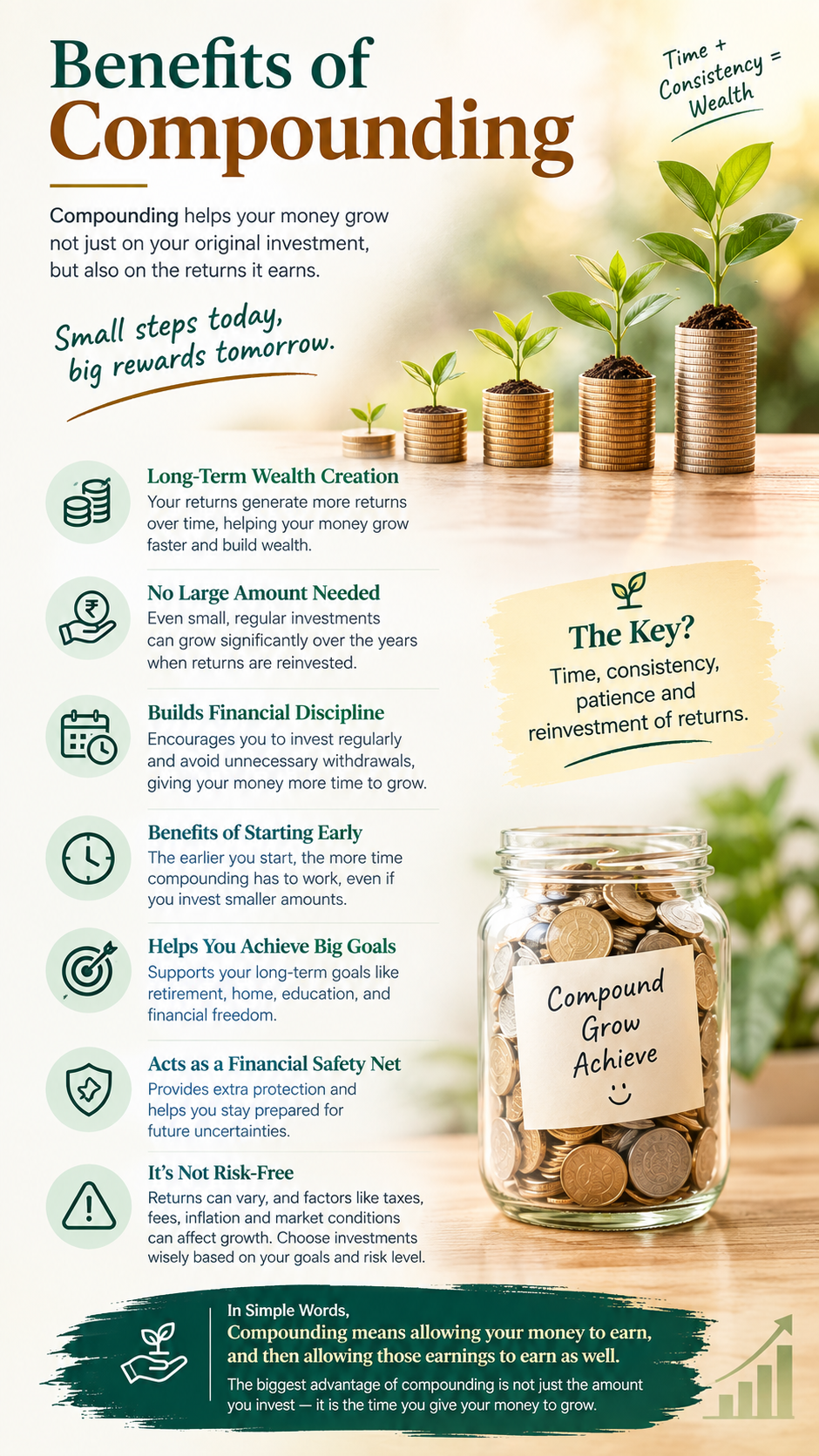
One of the biggest benefits of compounding is long-term wealth creation. When you invest regularly and leave your money invested for a longer period, your returns can generate additional returns. This means that time can become an important factor in growing your wealth.
Another major benefit is that you do not always need to invest a very large amount at once. Consistent investments, even smaller amounts, can grow significantly over many years when returns are reinvested. This makes disciplined investing an important part of long-term financial planning.
Compounding also encourages financial discipline. By investing regularly and avoiding unnecessary withdrawals, you allow your money more time to grow. The longer you stay invested, the more opportunity your investment has to benefit from compounding.
For example, if you invest ₹10,000 and earn a return, the next return can be earned on the original ₹10,000 plus the previous gains. Over several years, this process can make a significant difference compared with simply keeping the returns separate.
Another important advantage is that starting early gives compounding more time to work. Someone who starts investing earlier may have more time to build wealth than someone who starts much later, even if the later investor contributes larger amounts. This is why starting early and staying consistent can be valuable.
Compounding can also help investors work toward long-term goals such as retirement, buying a home, education, or financial independence. Instead of relying only on future income, investors can allow their existing capital and returns to contribute toward these goals.
However, compounding is not guaranteed to produce profits. Investment returns can vary, and some investments can lose value. Taxes, fees, inflation, and market conditions can also affect the actual growth of money. Therefore, understanding the risk and choosing investments according to your financial goals is important.
The key to benefiting from compounding is time, consistency, patience, and reinvestment of returns. The earlier you start and the longer you remain invested, the greater the potential effect of compounding can be.
In simple words, compounding means allowing your money to earn, and then allowing those earnings to earn as well. It turns small, consistent financial decisions into potential long-term growth.
The biggest advantage of compounding is not just the amount you invest—it is the time you give your money to grow.